Open reader view
This is NOT Homeschooling
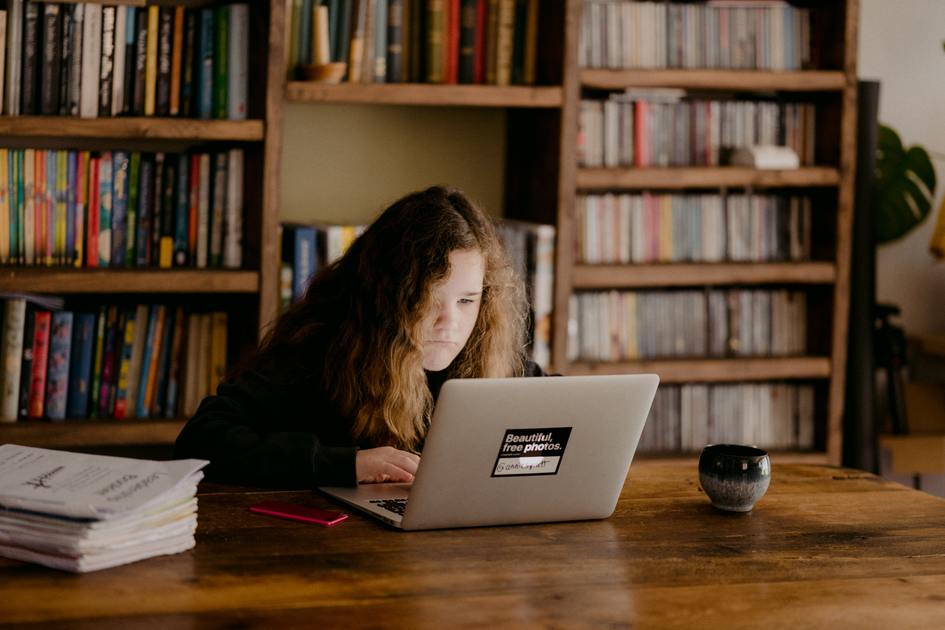
Parents keep commenting to me: “Wow- this is so hard! I don’t know how you do this all the time.”
And I answer: “We don’t. We homeschool. It’s a totally different thing than what’s happening here.”
Families who are trying to meet the Corona-induced demands of “regular” schools while quarantined at home (and trying to work) are not homeschooling. I’ve been calling it “school-homing-“ instead of adapting the schooling to fit the home, it’s having the home mandated by the school. And people are struggling. For some families it’s working decently, even well. But many, many others are overwhelmed and frustrated. This is not what anyone signed up for. It’s no one’s fault, but it needs to be acknowledged.
Running around looking for kids and devices to connect at specific times so that teachers may or may not successfully convey classroom learning virtually? Printing out extra work, and policing their completion? Trying, during a global crisis, to manage multiple kids, housework, and making a living in a way that was never coordinated? This is not homeschooling.
In real homeschool families, we don’t answer to an external institution, that makes unrealistic demands on families, and streams clumsily designed zoom calls into limited devices at inconvenient times. We don’t abdicate the privilege of educating our children to others who have dozens of other children to consider and compromise along with our own. We don’t worry that they will ‘get in trouble’ or ‘fall behind’ because of things that are not at all their faults. And we don’t pay tuition for work that we have to do.
I’m not villainizing schools and educators- I empathize with them, and I was a classroom teacher for a decade, once upon a time, so I empathize. They, like the rest of the world, are trying to cope with unforeseeable obstacles. They are trying to serve their populations however they can, and keep their organizations afloat, but make no mistake: This is not homeschooling.
In actual homeschooling, you are the custom designers of your children’s learning experience. You can enlist guidance, delegate, or do your own research. You decide when, how, where, why, and what they learn. You tailor the programming to the needs of your family- your work, your other kids, and most importantly the students’ emotional and academic needs. You can slow it down if they need more practice or patience. You can move it along when they master material easily or grow bored with unnecessary units. You can afford to digress and enrich and specialize. You can incorporate creativity, sensitivity, fun, and relevance. You can take advantage of the cultural resources and activities in your area. You can travel (well, except during a Pandemic) and spend more time on creative outlets, the arts, nature, sports, music, recreational hobbies and volunteering. You can work on cultivating social responsibility, values, emotional intelligence, and self-awareness. Children learn to tune in to their own minds, hearts, conscience, gifts, talents, and intuition, and to express and process with adults who know and love them, and make time to hear them out. We reassess and improve as we go along, because we understand that child development is not an assembly line production, it's dynamic and individualized.
I will continue to share more about actual homeschooling, as I see there is genuine interest. When we began, we honestly got most of our information for free online, accumulating more as we went along. But for now, just understand, that this ad hoc, school-homing band-aid situation is not the same thing, and that if it’s not working for your family, real homeschooling, even temporarily, might be a more feasible alternative.
Have you ever wondered how often people engage in sexual activity?
Or how often is optimal for healthy, happily married couples to aim for?
(I purposely used the euphemism “be intimate” in the title because often, people who ask this question in the framework of “supposed to” are uncomfortable with the more direct language of “have sex.” They may prefer to say things like : “be together, do it, make love, have relations, etc.” Whatever works:)
Couples therapists get this question a lot, especially from people who feel like they didn't or don't have enough information in the area of sexuality education.
It’s a legitimate curiosity, but the answer may be unsatsifying.
Firstly: “supposed to” is not a great framework for healthy sex. It works better when the focus is on mutual pleasure, not obligation or comparison.
Second: Frequency is not something that is mandated. Not psychologically, not legally, not Biblically.
It’s determined by and customized to each couple.
There is a Medrash that describes this, and is quoted by Rashi in this week’s Torah portion (I’m writing this the week of VaYishlach, but you can read it any week:)
When Yaakov sent gifts of livestock to his brother Esav, the Torah lists in great detail, the numbers and species of all the animals in the caravan.
Why do we care how many he-goats and she-goats there were?
The answer offered is that the ratio of male to female animals was determined by how often they needed to mate, which was determined by how strenuously they worked. The Medrash extrapolates an analogy to human mating schedules. (The paradigm used by the Talmudic literature is phrased in terms of a husband’s requirement to be available for his wife, not the reverse, but sex should always be consensual both ways.)
The Medrash says that men of leisure might be available daily, laborers twice weekly, donkey drivers once a week, camel drivers ones a month, and sailors/ those who travel for work, every six months.
Of course these are just some examples but Rashi goes on to explain:
“From here we learn that this need is not equal to every person [or couple.]” It depends on the couple’s individual schedules, emotional, and physical limitations and needs.
I’ve heard many people say that they were initially under the impression that couples only have sex when they want to conceive a baby. They were genuinely shocked to learn otherwise. This is not so ludicrous, when you consider the fact that many young people are taught about sex only in the framework of “how babies are made” if that much. Of course, most couples have far more sexual activity than they do children or attempts to conceive them.
It’s a legitimate query to ask how often couples have sex, but there isn’t a one size fits all answer.
Naturally there are some broad, cultural averages, and data. The most commonly quoted one is approximately once a week, but the numbers range significantly, and fluctuate within each couple based on many variables, such as stages of life like pregnancies, having babies and young children, medical or situational factors, and other variables that often make it challenging or more feasible. So please do not use that average to shame yourself or your partner for wanting more or less than that!
The healthiest answer to "how often should a couple be intimate is “as often as works well for both of them at each stage and season of life.”
Desire discrepancies and changes in libido over time are normal, but if you're finding that yours or your partner's are feeling disruptive to your relationship, please take the time to have a loving, strategizing conversation about it with your spouse, read up on the subject, and if necessary reach out for help.
Check out my course!
A Religious Families Guide to Healthy Holy Sex Education: Sacred Not Secret
Elisheva Liss, LMFT is a psychotherapist in private practice. Her book, Find Your Horizon of Healthy Thinking, is available on Amazon.com. She can be reached for sessions or speaking engagements at speaktosomeone@gmail.com More of her content can be found at ElishevaLiss.com
 Previous
